
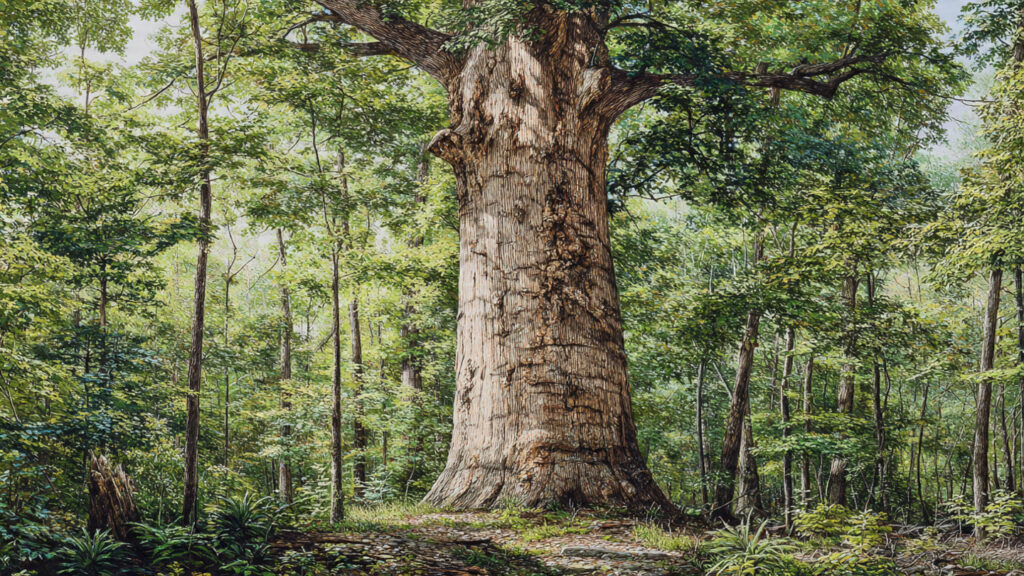
Champion trees represent the largest known specimens of their species, measured by trunk size, height, and canopy spread.
They are living monuments of time, often standing for hundreds of years while witnessing environmental change, human development, and shifting ecosystems.
In and around Lewis Center, Ohio, nature lovers can discover a surprising variety of mature forests, parks, and preserved green spaces.
This region of central Ohio blends suburban growth with pockets of untouched woodland that still shelter impressive native trees.
Located in Delaware County, Lewis Center sits close to larger natural corridors that connect parks, wetlands, and conservation areas.
These green corridors make it possible for some trees to grow undisturbed into true champion-class specimens.
What Makes a Tree a “Champion” in Ohio
A champion tree is not just large—it is officially measured and ranked using a point system.
This system considers trunk circumference, total height, and average crown spread to calculate a final score.
In Ohio, champion trees are tracked through statewide forestry programs and conservation databases.
These records help scientists, environmentalists, and nature enthusiasts identify exceptional trees across the state.
The idea is not only about size, but also about ecological importance.
Older, larger trees often support more biodiversity, offering habitats for birds, insects, fungi, and small mammals.
In regions like Lewis Center, these trees become silent landmarks of natural history.
They remind visitors that long before suburban development, dense forests dominated much of Ohio’s landscape.
Best Natural Areas Near Lewis Center to Explore Large and Mature Trees
One of the best ways to experience champion-level trees is by visiting nearby protected parks and nature preserves.
These areas provide the ideal conditions for older hardwood species to thrive without disturbance.
Just a short drive from Lewis Center, parks such as Alum Creek State Park offer vast forested areas and scenic trails.
Here, you can find mature oak, maple, and beech trees that display impressive girth and age.
Another nearby natural destination is Highbanks Metro Park, known for its deep ravines and old-growth forest patches.
The elevated trails here provide excellent opportunities to observe towering trees from different perspectives.
These parks do not always officially label individual “champion trees,” but many specimens meet or approach champion status.
Walking through these forests gives visitors a real sense of what Ohio looked like centuries ago.
Common Champion Tree Species You Can Spot in the Region
The forests around Lewis Center are dominated by hardwood species that are well-adapted to Ohio’s climate.
Many of these trees have the potential to grow into champion size if left undisturbed for long periods.
White oak is one of the most iconic species in the region, known for its strength and longevity.
These trees can live for several centuries and develop massive trunks over time.
Sugar maple is another common species, famous for its vibrant fall colors and strong canopy structure.
In protected areas, sugar maples can reach remarkable sizes and become ecological anchors of the forest.
Other notable species include tulip poplar, American beech, and black walnut.
Each of these contributes to the biodiversity and visual richness of the local woodlands.
Why Champion Trees Matter for Ecology and Conservation
Champion trees play a critical role in maintaining healthy ecosystems.
Their large canopies provide shade, reduce soil erosion, and regulate local temperatures within forests.
These trees also store significant amounts of carbon, making them important natural allies in climate regulation.
Older trees are especially valuable because their extensive root systems stabilize soil and water flow.
Beyond their environmental value, champion trees are living records of history.
Some may have started growing long before modern cities and roads existed in the region.
Protecting these trees ensures that future generations can experience the same natural heritage.
Conservation efforts in Ohio continue to emphasize the importance of preserving mature forests wherever possible.
Tips for Exploring and Respecting Champion Trees
When visiting natural areas near Lewis Center, it is important to explore responsibly.
Staying on designated trails helps protect root systems and prevents soil compaction around sensitive trees.
Avoid damaging bark or collecting plant material, as even small disturbances can affect tree health.
Respecting wildlife habitats around these trees is equally important for maintaining ecological balance.
Bringing a field guide or using a tree identification app can enhance your experience.
It allows you to recognize species and better understand which trees might be approaching champion status.
Early morning or late afternoon visits often provide the best lighting for photography and observation.
These times also tend to be quieter, offering a more peaceful connection with nature.
Final Thoughts: Experiencing Ohio’s Living Giants
Exploring champion trees near Lewis Center is more than a nature walk—it is a journey through time.
Each massive trunk and wide canopy tells a story of survival, growth, and resilience.
Whether you are hiking through nearby parks or simply observing trees along quiet trails, the experience is deeply grounding.
It reminds us that nature’s greatest achievements are often slow, silent, and centuries in the making.
For nature lovers, Lewis Center and its surrounding areas offer a meaningful opportunity to connect with Ohio’s natural heritage.
And among these landscapes, the champion trees stand as living giants worth discovering, protecting, and admiring.