
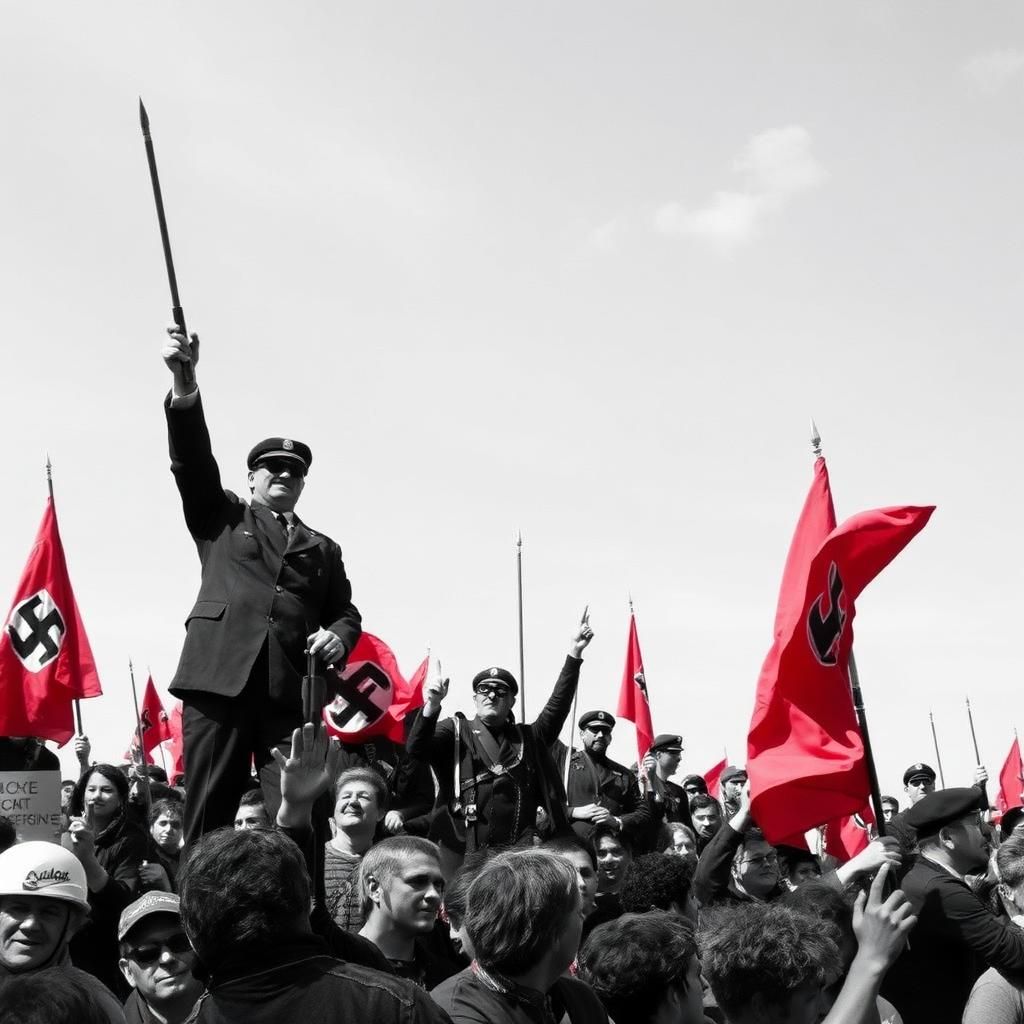
Political ideologies shape how societies are governed, how power is distributed, and how citizens experience daily life.
Among the most studied and controversial of these ideologies is fascism, and the term “Fascisterne” is often used in historical and linguistic contexts to refer to fascist groups or supporters of fascist movements.
Understanding this concept requires exploring its origins, core beliefs, and long-term political consequences.
Origins of Fascisterne
The roots of Fascisterne are closely connected to the rise of fascism in early 20th-century Europe.
Fascism developed in a period marked by economic instability, political unrest, and the aftermath of World War I.
In countries such as Italy, these conditions created an environment where radical political movements gained support by promising order, national unity, and strong leadership.
Over time, similar movements appeared in other parts of Europe, each adapting the ideology to local conditions while maintaining its core principles.
Historical Development of the Ideology
As fascist movements expanded, they became more organized and politically influential during the interwar period.
Leaders promoted centralized authority and emphasized loyalty to the state above individual rights or political opposition.
These movements often relied on strong propaganda systems to shape public opinion and reinforce nationalistic messages.
The historical development of Fascisterne is therefore closely tied to the broader evolution of authoritarian politics in the 20th century.
Core Beliefs and Ideological Structure
At the center of fascist ideology is the belief in a strong, centralized state led by a powerful authority figure.
This system typically prioritizes national identity, unity, and discipline over individual freedoms and democratic processes.
Fascist movements often reject political pluralism, meaning they do not support multiple competing political parties or viewpoints.
Instead, they promote a unified national ideology that is enforced through government institutions and social systems.
Social and Political Organization
Under fascist systems, political and social structures are tightly controlled by the ruling authority.
Institutions such as the media, education system, and military are often aligned with state ideology to maintain consistency and control.
This centralization reduces political opposition and limits the ability of alternative voices to participate in governance.
As a result, society becomes highly structured around obedience and national unity.
Fascisterne in Historical Conflicts
Fascist movements played a major role in some of the most significant conflicts of the 20th century.
Their expansionist policies and authoritarian governance contributed to tensions that led to global conflict during World War II.
Following the war, fascist regimes were widely discredited, and many were dismantled or replaced by democratic systems.
This historical outcome significantly shaped modern political attitudes toward authoritarian ideologies.
Political Impact on Modern Systems
The legacy of Fascisterne continues to influence political discussions today, particularly in debates about authoritarianism and democracy.
Modern political systems often define themselves in opposition to fascist principles, emphasizing human rights, electoral democracy, and institutional checks and balances.
At the same time, scholars study fascism to understand how such systems emerge and how societies can prevent similar developments.
This makes its political impact both historical and ongoing in academic and civic discourse.
Ideological Criticism and Interpretation
Fascist ideology has been widely criticized for its suppression of political freedom and individual rights.
Historians and political scientists often analyze it to understand the conditions that allow authoritarian movements to gain support.
There is also ongoing debate about how the term should be used, as it can sometimes be applied too broadly or inaccurately in modern political discussions.
Careful historical context is therefore essential when interpreting references to Fascisterne.
Lessons from History
One of the most important lessons from studying Fascisterne is the importance of protecting democratic institutions.
Systems that include checks and balances, free elections, and independent media help prevent the concentration of unchecked power.
Education and historical awareness also play a key role in ensuring that past mistakes are not repeated.
These lessons remain highly relevant in understanding modern governance and political stability.
Conclusion
Fascisterne represents a historical connection to fascist movements that shaped much of 20th-century political history.
By examining its origins, beliefs, and political impact, we gain a clearer understanding of how authoritarian systems develop and why they were ultimately rejected in many parts of the world.
Its study continues to offer valuable insights into democracy, governance, and the importance of safeguarding political freedoms in modern society.