
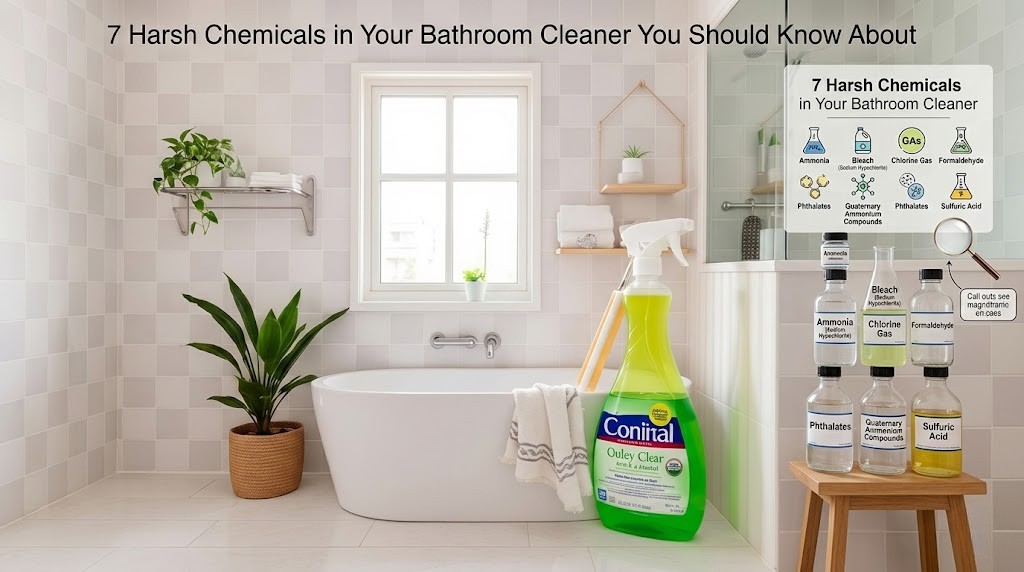
It is easy to grab a cleaning bottle off the shelf without flipping it over to read the fine print. These products promise spotless tiles and sanitised surfaces, but the ingredients doing the heavy lifting can be surprisingly harsh. Some irritate the skin on contact. Others release fumes that linger in tight, poorly ventilated spaces. Knowing what actually sits inside these formulas puts families in a better position to protect their health. Here are seven chemicals worth recognising before the next deep clean.
1. Sodium Hypochlorite (Bleach)
Bleach owes its germ-killing reputation to sodium hypochlorite. The compound works by breaking down organic material on contact, which is why it handles mould and bacteria so effectively. The trade-off is chlorine gas. In a small bathroom with the door shut, those fumes build up quickly and can trigger coughing, chest tightness, and stinging in the nose and throat.
The danger increases when bleach meets ammonia or anything acidic; that combination produces chloramine vapours, which are far more toxic. Repeated low-level exposure has also been linked to worsening asthma over time. For households looking to avoid these risks, a plant-based bathroom cleaner offers a practical alternative. Many of these formulas rely on citric acid or hydrogen peroxide to cut through grime without filling the room with harmful gases.
2. Ammonia
Ammonia shows up in glass and multi-surface sprays because it evaporates cleanly, leaving a streak-free finish. That quick evaporation is also the problem. The compound is highly volatile, so it enters the lungs almost immediately after spraying. Brief contact can redden and water the eyes, while prolonged inhalation may irritate the respiratory lining.
Anyone living with bronchitis or similar conditions faces heightened sensitivity. Opening a window helps, but it does not remove the risk altogether. A quick scan of the label before buying remains one of the simplest precautions available.
3. Phthalates
Phthalates tend to lurk behind a single word on the label: “fragrance.” Manufacturers add them so scents cling to surfaces long after they’ve been wiped. The concern is hormonal. Published research ties phthalate exposure to disruptions in the endocrine system, with particular implications for reproductive health.
These compounds pass through the skin during ordinary use. Because regulations seldom require companies to list individual fragrance components, most consumers have no way of knowing phthalates are present. Choosing unscented products, or those with fully disclosed ingredient lists, is the most direct way to limit contact.
4. Triclosan
Triclosan gained popularity as an antibacterial additive, and it still turns up in certain cleaning formulations. Scientific evidence suggests that it encourages bacterial adaptation, contributing to antibiotic resistance over time. Animal studies have also raised red flags about thyroid disruption, prompting questions about its long-term safety for humans.
Regulators have pulled triclosan from many personal care products. Household cleaners, however, face fewer restrictions. Reviewing the ingredient list before purchasing is still the most reliable way to avoid it.
5. Hydrochloric Acid
Hydrochloric acid is the go-to ingredient for dissolving limescale and hard water deposits. Toilet bowl cleaners frequently contain it at concentrations high enough to burn bare skin on contact. The vapours irritate the eyes and throat almost instantly once the cap comes off.
Wearing gloves and keeping the window open are essential. Even so, gentler descaling agents, such as vinegar-based solutions, can handle moderate mineral buildup without carrying the same level of risk.
6. Formaldehyde-Releasing Preservatives
Several cleaning products contain preservatives that gradually release formaldehyde as they break down. Quaternium-15 and DMDM hydantoin are two of the most common. Formaldehyde is a recognised carcinogen, and even small amounts can set off allergic reactions on the skin.
These preservatives rarely appear on labels as “formaldehyde.” Identifying them means learning a few chemical aliases. Environmental health organisations maintain searchable online databases that make this process straightforward.
7. 2-Butoxyethanol
This glycol ether gives certain sprays their impressive grease-cutting ability. At elevated concentrations, 2-butoxyethanol can damage red blood cells when inhaled or absorbed through the skin. Regulatory agencies in some countries do not require it on labels, which leaves a significant gap in consumer awareness.
Overexposure symptoms range from a persistent sore throat to, in serious cases, pulmonary oedema. Choosing products that list every ingredient on the packaging is the clearest way to sidestep this particular compound.
Conclusion
A sparkling bathroom should not come at the cost of household health. Each chemical covered here carries documented risks, from minor skin irritation to serious respiratory and hormonal effects. Reading ingredient labels, cross-checking unfamiliar names, and favouring formulas with fewer synthetic additives all make a measurable difference. These are small adjustments in shopping habits, not major lifestyle overhauls. Staying informed about what goes into each bottle gives families the confidence to keep their spaces clean and their indoor air genuinely safe.