
Website speed has become one of the most important factors in the success of any online platform.
Whether you run a blog, an online store, or a business website, users expect pages to load quickly and smoothly.
Slow-loading pages can frustrate visitors, increase bounce rates, and negatively impact search engine rankings.
To solve this problem, developers and hosting providers use several optimization techniques, one of which is known as a warmup cache request .
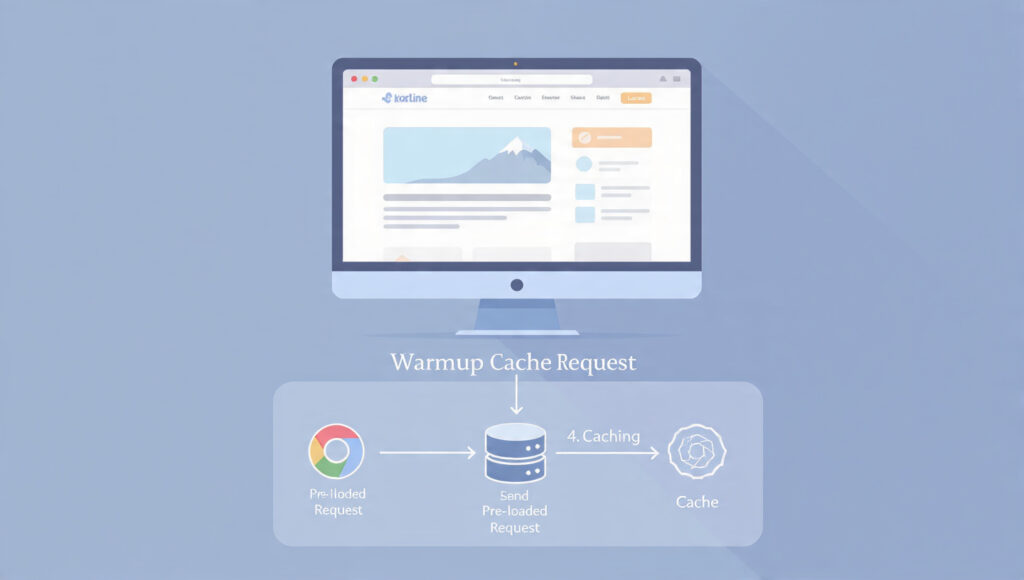
A warmup cache request helps prepare a website’s cache before real users visit the site, ensuring faster loading times from the very first page request.
For beginners managing a website, understanding how cache warming works can significantly improve both performance and user experience.
Understanding Website Caching
Before learning about warmup cache requests, it is important to understand the concept of caching.
Caching is a technique used to store temporary copies of website content so it can be delivered faster to users.
Instead of generating a page every time someone visits it, the server saves a pre-rendered version of that page in a cache storage system.
When another visitor requests the same page, the server can deliver the cached version instantly instead of rebuilding it from scratch.
This process greatly reduces server workload and improves loading speed.
Caching systems are commonly used in modern websites, especially those built with content management systems or dynamic applications.
What Is a Warmup Cache Request?
A warmup cache request is a process that automatically loads website pages into the cache before real users access them.
Normally, when a page is requested for the first time after a cache reset, the server must generate the page dynamically.
This initial request takes longer because the page is not yet stored in the cache.
Once the page is generated, it becomes cached for future requests.
The first visitor therefore experiences slower loading compared to later visitors.
A warmup cache request prevents this delay by automatically visiting important pages in advance.
This ensures that cached versions are already prepared when real users arrive.
The Problem of a Cold Cache
When a website’s cache is empty, it is often referred to as a cold cache.
A cold cache means the server must process every page request from scratch.
This situation commonly occurs after website updates, server restarts, or manual cache clearing.
In such cases, the first visitors may experience slower loading speeds because the cache has not been built yet.
Warmup cache requests solve this issue by proactively loading pages and storing them in the cache.
As a result, the site performs efficiently even immediately after maintenance or updates.
How Warmup Cache Requests Work
The process behind cache warming is fairly straightforward.
A script, tool, or automated system sends requests to different pages of a website just like a real visitor would.
These requests trigger the server to generate the pages and store them in the cache.
Once the pages are cached, future visitors receive the cached versions instantly.
This reduces server processing time and improves overall performance.
Many hosting providers and performance plugins automate this process to ensure consistent website speed.
Why Warmup Cache Requests Matter for Beginners
For beginners running websites, maintaining good performance can be challenging without technical knowledge.
Cache warming simplifies this process by ensuring optimized page delivery without manual intervention.
Visitors are more likely to stay on websites that load quickly and respond instantly.
Search engines also evaluate website speed when determining rankings in search results.
By using cache warmup strategies, beginners can ensure their websites perform well even during periods of high traffic or after updates.
Benefits of Using Warmup Cache Requests
There are several advantages to implementing cache warming for a website.
One of the biggest benefits is faster page loading for first-time visitors.
Instead of waiting for the server to generate a page, users receive a cached version instantly.
Another advantage is reduced server workload.
Cached pages require fewer computing resources, which improves overall efficiency.
Warmup cache requests also help maintain consistent performance after updates.
Whenever a website publishes new content or clears its cache, the system can automatically rebuild cached pages.
These benefits collectively contribute to better user experience and improved site reliability.
The Connection Between Cache Warming and SEO
Search engines prioritize websites that deliver fast and smooth user experiences.
Page loading speed is considered an important ranking factor for search engine optimization.
If a website loads slowly, visitors may leave before interacting with the content.
This behavior increases bounce rates and signals poor user experience to search engines.
Warmup cache requests ensure that pages load quickly even for the first visitor.
This improvement can positively influence SEO performance and help websites rank higher in search results.
Tools That Automate Cache Warmups
Many modern website platforms include built-in tools for cache management.
These tools often provide automated cache warmup features.
Performance plugins, server-side caching systems, and content delivery networks may all support cache warming.
These tools typically scan a website’s sitemap and request pages automatically to generate cached versions.
This automation allows website owners to focus on creating content while the system handles performance optimization in the background.
Best Practices for Effective Cache Warming
To get the most out of warmup cache requests, website owners should follow a few best practices.
First, focus on warming important pages such as the homepage, blog posts, and landing pages.
These pages usually receive the most traffic and should load quickly for visitors.
Second, schedule cache warming after publishing new content or performing website updates.
This ensures that new pages are cached immediately.
Finally, combine cache warming with other optimization techniques such as image compression, content delivery networks, and optimized hosting.
These strategies work together to deliver the best possible website performance.
Final Thoughts
A warmup cache request is a powerful yet simple technique for improving website speed and reliability.
By preparing cached pages before visitors arrive, websites avoid the delays associated with cold cache situations.