
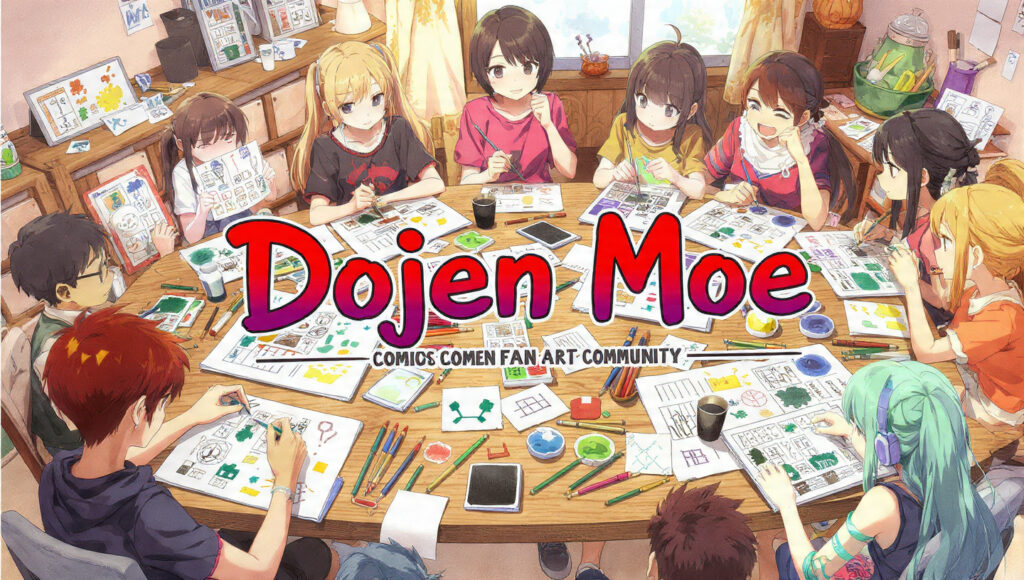
Dojen Moe is an emerging expressive aesthetic in online art communities that blends fan culture creativity with emotion‑driven visual appeal.
The term combines ideas from doujin–style independent art — which celebrates self‑published, fan‑made work — with the moe emotional aesthetic rooted in Japanese anime and manga fandoms.
Together, these creative currents have shaped Dojen Moe into a unique cultural movement focused on emotional resonance rather than commercial polish.
Fan Culture: The Foundation of Dojen Moe
At its core, fan culture is the driving force behind Dojen Moe — giving it life well before it became an identifiable term online.
Traditionally, doujin art refers to independently created works, often fan‑made comics, illustrations, and stories shared outside mainstream commercial systems.
This spirit of creative freedom and community sharing helped establish the groundwork for Dojen Moe. Fans experiment, remix, and reinterpret characters from popular media without constraints, making personal and emotionally focused art that resonates with other community members.
Instead of being defined by formal institutions, the aesthetic emerged through conversations, shared artworks, and collective understanding within fan circles.
Understanding “Moe” and Its Emotional Roots
To see how fan culture shapes Dojen Moe, it’s helpful to understand moe itself.
“Moe” is a Japanese term widely used in anime and manga fandom to describe a feeling of affection, warmth, or protectiveness viewers feel toward certain characters — particularly those who are innocent or emotionally expressive.
In traditional otaku spaces, this response is not merely about visual trends or cuteness; it’s about a psychological connection between the viewer and character traits that evoke gentle emotions.
Dojen Moe builds directly on that emotional core, extending it from individual character reactions into a broader visual language and aesthetic experience generated and shared by fan communities.
How Fan Culture Shapes the Aesthetic Style
Fan culture influences Dojen Moe in both how it is created and why it feels the way it does.
Because Dojen Moe grew out of spaces where fans share and critique one another’s work, the aesthetic is less about technical precision and more about emotional impact and sincerity.
Artists influenced by fan culture often emphasize:
- Soft, muted palettes and gentle hues that create a calm, nostalgic visual tone.
- Expressive but imperfect character designs that prioritize emotional nuance over polished realism.
- Minimal or simple backgrounds that keep focus on emotional storytelling rather than spectacle.
These stylistic choices reflect the shared values of fan communities — where personal expression, emotional authenticity, and relatability are central artistic goals.
Community Dynamics and Creative Exchange
Unlike top‑down art movements imposed by institutions or commercial studios, Dojen Moe has no central authority or formal definition.
Instead, it evolves organically as artists publish work, receive feedback, and adapt based on what resonates emotionally within their circles.
Comment sections, forums, art challenges, and collaborative projects all act as feedback loops — reinforcing styles and themes that audiences respond to emotionally.
This community‑driven process shapes both the aesthetic and its cultural significance, turning Dojen Moe into a collective creation rather than a trend dictated by major media outlets or commercial interests.
Narrative and Emotional Focus Over Technique
What sets Dojen Moe apart from other styles is how emotion guides artistic choices.
Where some art movements emphasize intricate technique or visual spectacle, Dojen Moe places emotional honesty and vulnerability at the center of creative decision‑making.
This means that features traditionally seen as imperfections — such as simple shading, uneven lines, or minimal composition — are embraced if they enhance the emotional story.
Fan culture, with its emphasis on individual experience and emotional engagement with characters, naturally reinforces this value system within Dojen Moe communities.
Why Fan Culture Keeps It Relevant
Fan communities play a key role in helping Dojen Moe endure beyond fleeting online trends.
Because the aesthetic reflects shared emotional experiences — nostalgia, affection, comfort, introspection — it resonates with audiences who seek deeper interaction with visual media.
Fans not only consume but contribute to the style, turning it into a participatory cultural practice. This makes Dojen Moe feel personal and community‑centered, rather than mass‑produced or surface‑level.
Moreover, as digital platforms encourage algorithm‑driven content, Dojen Moe offers a quiet alternative: art that values meaning over metrics, connection over virality.
Conclusion: Fan Culture as the Heartbeat of Dojen Moe
In essence, fan culture is not just a backdrop for Dojen Moe — it is its creative engine.
By merging the emotional affection of moe with the independent spirit of doujin‑inspired creation, fan communities have shaped an aesthetic that reflects sincerity, vulnerability, and personal connection.
This artistic phenomenon thrives because it is community‑driven, emotionally grounded, and flexible — making it one of the most compelling examples of how fan culture continues to redefine visual creativity in the digital era.