
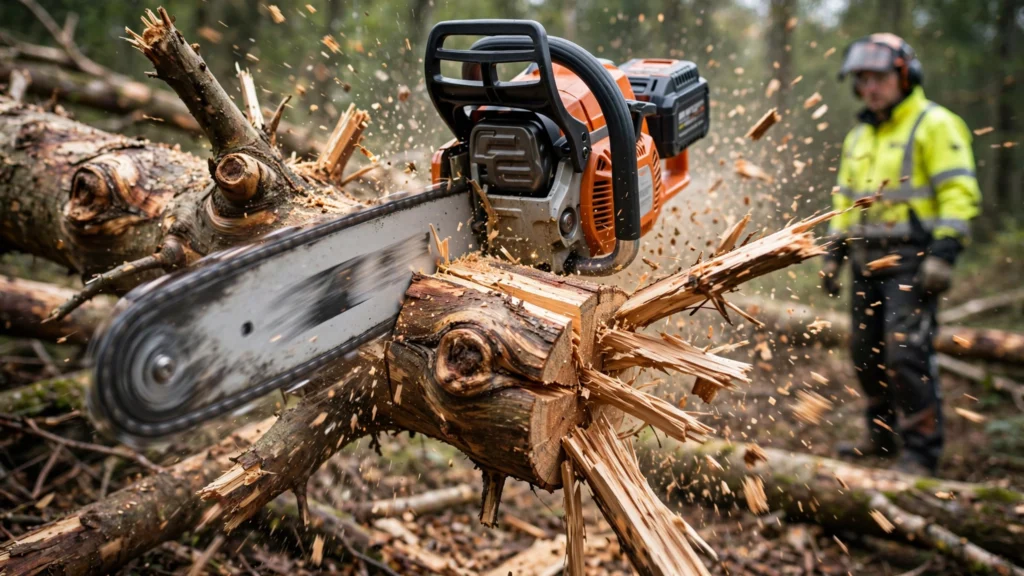
Battery chainsaws have become a popular choice for homeowners, gardeners, DIY enthusiasts, and property owners who need a convenient tool for cutting branches, trimming trees, and preparing firewood. Compared with traditional petrol-powered chainsaws, battery models are generally quieter, easier to start, and simpler to maintain.
However, their convenience can sometimes create a false sense of security. A battery chainsaw still contains a rapidly rotating cutting chain capable of causing serious injuries when it is handled incorrectly or used without proper preparation.
Understanding the most common battery chainsaw mistakes is one of the best ways to improve safety. Whether you are using a compact pruning model or a more powerful cordless chainsaw, proper handling, protective equipment, maintenance, and awareness of your surroundings are essential.
Why Battery Chainsaw Safety Is Important
A battery chainsaw uses an electric motor to drive a sharp chain around a guide bar at high speed. This design provides substantial cutting power, but it also creates risks if the operator loses control or places the cutting area too close to the body.
Unlike some ordinary garden tools, a chainsaw can react suddenly when the chain encounters knots, hard sections of wood, or branches under tension. Understanding how the tool behaves before beginning a job can help users avoid dangerous situations.
Battery-powered operation does not eliminate chainsaw hazards. The absence of fuel, exhaust fumes, and engine maintenance makes the tool more convenient, but the cutting chain remains just as important to respect as the chain on a petrol-powered model.
Common Mistake: Using a Battery Chainsaw Without Preparation
One of the most frequent mistakes is picking up the chainsaw and immediately starting to cut without checking the tool and surrounding area. Rushing into a cutting job can cause the operator to overlook loose branches, damaged components, poor footing, or people nearby.
Before switching on the chainsaw, the operator should inspect the equipment and identify potential hazards around the work area. A few minutes of preparation can prevent problems that might otherwise occur during cutting.
The operator should also consider where the cut material is likely to move or fall. Branches can swing, roll, bounce, or change direction after being separated from a tree, so the work area should provide enough space for safe movement.
Common Mistake: Not Reading the Manufacturer’s Instructions
Battery chainsaws may look similar, but controls and safety features can differ between manufacturers and models. Assuming that every cordless chainsaw operates in exactly the same way can lead to incorrect handling.
The manufacturer’s manual normally explains how to install the battery, engage safety controls, adjust the chain, operate the chain brake, lubricate the cutting system, and perform maintenance. It may also provide important information about the correct batteries and chargers for that specific model.
Reading the instructions before the first use is therefore an important safety step. Users should become familiar with the controls while the chainsaw is switched off before attempting any cutting work.
Common Mistake: Operating Without Protective Equipment
Another serious mistake is treating a battery chainsaw like an ordinary garden tool and using it without appropriate protection. Wood chips, sawdust, broken branches, and other debris can be thrown toward the operator during cutting.
Eye protection is particularly important because small pieces of wood can travel quickly. Depending on the task, appropriate gloves, sturdy non-slip footwear, hearing protection, and chainsaw-specific protective clothing may also be necessary.
Protective equipment should never be considered a substitute for safe technique. Instead, it provides an additional layer of protection when combined with proper chainsaw operation and awareness.
Common Mistake: Holding the Chainsaw With One Hand
A battery chainsaw may feel lightweight and easy to control, especially when compared with larger petrol-powered machines. This can tempt some users to operate it with one hand, particularly when cutting small branches.
One-handed operation can significantly reduce control over the tool. If the chain catches or the guide bar moves unexpectedly, the operator may not have enough control to respond safely.
For normal chainsaw operation, users should maintain the two-handed grip recommended by the manufacturer. Keeping both hands in the correct positions provides greater stability and allows the operator to respond more effectively to sudden movements.
Common Mistake: Ignoring Kickback
Kickback is one of the most important hazards associated with chainsaw operation. It can occur when a particular part of the guide bar, especially around the nose, contacts wood or another object in a way that causes the saw to move rapidly back toward the operator.
The movement can happen extremely quickly, which means relying on reaction alone is not a reliable safety strategy. Prevention is more important than trying to react after kickback begins.
Operators should learn the kickback warnings in their chainsaw manual and use recommended cutting techniques. Maintaining a firm two-handed grip, keeping proper body positioning, and using the chain brake correctly can help reduce the risk and consequences of unexpected movement.
Common Mistake: Cutting Above Shoulder Height
Using a chainsaw above shoulder height can make it much harder to maintain control. It can also place the guide bar in a position where the operator has less ability to respond to sudden movement.
Working overhead can increase physical fatigue as well. As the operator becomes tired, maintaining a stable position and accurate grip can become more difficult.
Routine cutting should generally be performed from a stable position where the chainsaw can be controlled comfortably. If a branch is too high to reach safely from the ground, using an appropriate alternative method or contacting a qualified professional is usually safer than stretching or overreaching with the chainsaw.
Common Mistake: Standing on an Unstable Surface
A stable stance is essential when operating a chainsaw. Using the tool while standing on a ladder, unstable platform, pile of wood, slippery ground, or uneven surface can increase the likelihood of losing balance.
A chainsaw requires both hands for proper control, so the operator needs secure footing and enough freedom to maintain body balance. Losing balance while holding an active chainsaw can create an extremely dangerous situation.
The work area should therefore be cleared before cutting begins. If the terrain is too steep, slippery, or unstable for safe operation, the job should be reconsidered or handled by someone with the appropriate training and equipment.
Common Mistake: Forgetting the Chain Brake
Many battery chainsaws are equipped with a chain brake designed to stop the chain under specific circumstances. This is an important safety feature, but it is only useful when the operator understands how and when to use it.
A common mistake is moving around with the chainsaw while the chain brake is disengaged. Even when the trigger is not intentionally pressed, carrying the tool in an unsafe position can create unnecessary risk.
Operators should follow the manufacturer’s instructions regarding chain-brake operation. The brake should also be inspected regularly to make sure it is working correctly.
Common Mistake: Using a Dull or Damaged Chain
A sharp and properly maintained chain allows the chainsaw to cut efficiently. When a chain becomes dull, the operator may instinctively apply additional pressure to make the saw cut faster.
Excessive force can increase fatigue and make the tool more difficult to control. A damaged chain can create additional problems and should not be used until the issue has been properly addressed.
Regularly inspecting the chain for damage, excessive wear, and correct cutting performance is an important part of battery chainsaw maintenance. Sharpening or replacing the chain should be performed according to the manufacturer’s specifications.
Common Mistake: Incorrect Chain Tension
Correct chain tension is essential for safe and effective chainsaw operation. A chain that is too loose can potentially come away from the guide bar, while a chain that is too tight can create unnecessary stress on the cutting system.
Different chainsaws use different chain-adjustment mechanisms, so operators should follow the instructions for their specific model. Chain tension should be checked regularly, especially during longer cutting sessions.
Before adjusting the chain, the chainsaw should be switched off and the battery removed according to the manufacturer’s safety instructions. The cutting chain should always be treated as dangerous even when the motor is not running.
Common Mistake: Leaving the Battery Installed During Maintenance
One of the easiest ways to improve battery chainsaw safety is to remove the battery before maintenance and cleaning. Leaving the battery connected while working around the chain creates a possibility of accidental activation.
Battery removal is particularly important when adjusting chain tension, cleaning the guide bar, removing wood debris, or inspecting the cutting mechanism. The exact procedure should always follow the manufacturer’s instructions.
Removing the power source creates an additional barrier between the operator and accidental motor activation. It is a simple habit that can make routine maintenance considerably safer.
Common Mistake: Cutting Through Unknown Materials
Chainsaws are designed primarily for cutting wood, but operators may encounter unexpected objects hidden inside branches or logs. Nails, screws, wire, fencing, stones, and other materials can damage the chain or cause sudden movement.
Before cutting, the operator should inspect the material as carefully as possible. Suspicious or contaminated wood should be approached with caution rather than assuming the chain can safely cut through anything inside it.
A damaged chain should not simply be ignored after striking a foreign object. The cutting system should be inspected before the chainsaw is returned to normal operation.
Common Mistake: Ignoring Branch Tension
Branches and tree sections can contain significant internal tension. When a branch is cut, the stored force can cause it to move suddenly, potentially trapping the guide bar or pushing the operator into an unsafe position.
Understanding how wood is supported and how it may move during cutting is therefore important. Operators should avoid placing themselves in the likely path of a moving branch or section of wood.
Large, heavily tensioned, storm-damaged, or unstable trees can be particularly dangerous. If the operator cannot confidently predict how the material will move, professional tree-care assistance may be the safer choice.
Common Mistake: Working in Poor Weather
Weather conditions can significantly affect chainsaw safety. Rain can make handles and ground surfaces slippery, while strong winds can cause branches to move unpredictably.
Poor visibility can also make it difficult to identify hazards. Snow, heavy rain, darkness, and other challenging conditions can increase the possibility of slips, incorrect cuts, or missed obstacles.
For routine work, it is generally better to wait for suitable conditions. A chainsaw should only be used when the operator can maintain stable footing, clear visibility, and sufficient control of the tool.
Common Mistake: Working While Tired or Distracted
Concentration is essential when operating a chainsaw. Fatigue can affect reaction time, balance, grip strength, and decision-making, even when the operator has considerable experience.
Distractions can create similar problems. Conversations, mobile phones, nearby activity, or attempts to multitask can cause the operator to lose focus at exactly the wrong moment.
If concentration begins to decline, the safest approach is to stop the chainsaw and take a break. Chainsaw work should receive the operator’s full attention from preparation through completion.
How to Use a Battery Chainsaw Safely
Safe operation begins before the chain starts moving. The operator should inspect the chainsaw, check the battery, examine the chain and guide bar, confirm that safety features are functioning, and clear unnecessary people and obstacles from the work area.
Once the work area is ready, the operator should establish a balanced stance and hold the chainsaw securely with both hands. The chainsaw should be allowed to perform the cutting rather than being forced aggressively through the wood.
The operator should maintain awareness of the guide bar, cutting path, surrounding objects, and movement of the wood. If anything unexpected happens, the chainsaw should be stopped and the situation reassessed rather than attempting to continue through a dangerous condition.
Battery and Charger Safety
Battery chainsaw safety also includes proper care of the rechargeable battery. Only batteries and chargers approved by the manufacturer or specifically identified as compatible should be used with the chainsaw.
The battery should be inspected for visible damage before use. A battery that is swollen, cracked, leaking, excessively hot, or otherwise abnormal should not be used.
Charging should be performed according to the manufacturer’s instructions and in an appropriate environment. Batteries should also be stored under the conditions recommended by the manufacturer rather than being exposed to excessive heat, moisture, or other damaging conditions.
When to Stop Using a Battery Chainsaw
Knowing when to stop is an important part of safe chainsaw operation. If the chain becomes damaged, the guide bar develops a problem, the safety brake fails to operate correctly, or the chainsaw behaves unusually, the operator should stop using it.
Continuing to use a tool that appears defective can turn a minor maintenance problem into a serious safety hazard. The equipment should be inspected, repaired, or serviced according to the manufacturer’s recommendations before further use.
The same principle applies to the operator. If you become tired, lose concentration, or feel physically unstable, stopping the job is a safer decision than trying to finish quickly.
When Professional Help Is the Safer Choice
Some chainsaw jobs are simply beyond the appropriate skill level of a homeowner. Large trees, trees damaged by storms, unstable branches, work near electrical lines, steep terrain, and tasks requiring climbing can involve significant hazards.
Attempting these jobs without suitable training, equipment, and experience can expose the operator and others to unnecessary danger. Professional tree-care specialists have specialized knowledge and equipment for managing many complex cutting situations.
Hiring a professional is not a sign that a chainsaw user lacks ability. It is an important safety decision when the complexity or risk of a job exceeds what can reasonably be managed with ordinary equipment and experience.
Final Thoughts on Battery Chainsaw Mistakes and Safe Use
Battery chainsaws provide a practical and efficient way to handle many cutting tasks around a property. Their quiet operation, convenient starting system, and reduced maintenance requirements make them attractive to both experienced users and beginners.
However, convenience should never be confused with complete safety. The cutting chain remains capable of causing serious injury, and common mistakes such as one-handed operation, ignoring kickback, poor maintenance, unstable footing, inadequate protective equipment, and careless battery handling can create avoidable risks.
The safest approach is to prepare before every job, follow the manufacturer’s instructions, wear appropriate protective equipment, maintain the chainsaw properly, and remain focused throughout the operation. When a cutting task is too complex, unstable, or dangerous to manage confidently, stopping and seeking professional assistance is the responsible choice.
With proper knowledge and careful habits, users can enjoy the benefits of battery-powered chainsaws while significantly reducing unnecessary risks. Safe chainsaw use is ultimately a combination of good equipment, proper maintenance, correct technique, and sound judgment.