
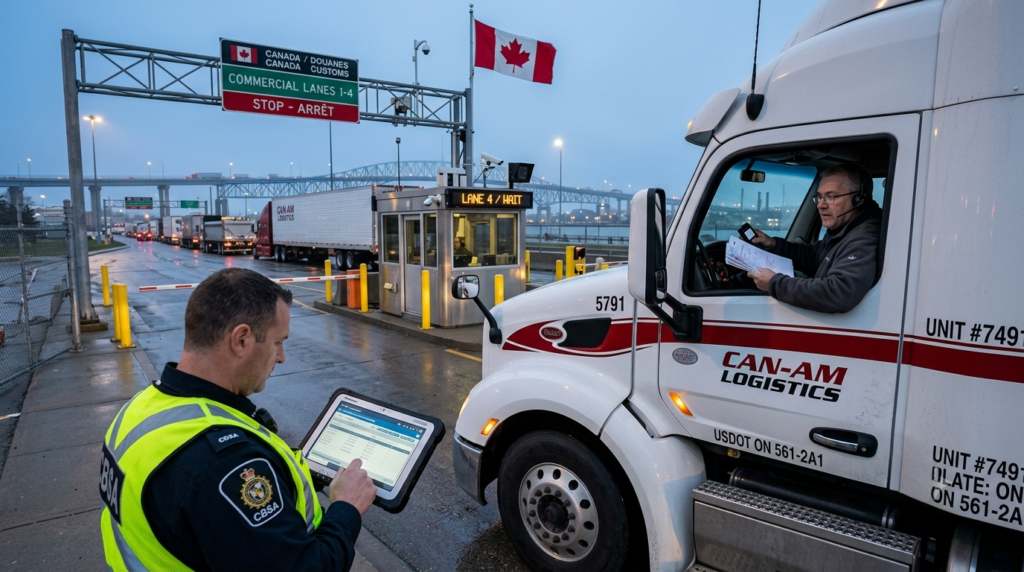
For highway carriers moving freight into Canada, the border does not wait. Miss your filing window, submit incomplete data or show up without an approved eManifest and the consequences are immediate. Delays, secondary inspections and potential penalties are all on the table.
Understanding how eManifest filing works under Canada’s Advance Commercial Information (ACI) programme is not optional for carriers involved in cross-border trucking: it is the foundation of compliant, efficient operations.
What ACI Requires and Why It Exists
The ACI programme is administered by the Canada Border Services Agency (CBSA) and mandates that highway carriers submit electronic cargo and conveyance data before arriving at the Canadian border. The purpose is straightforward: give CBSA officers the information they need to assess risk and make clearance decisions before the truck reaches the gate.
For Canada import logistics, this pre-arrival data layer is what separates a smooth border crossing from an extended hold. CBSA uses the submitted manifest to verify shipment details, check carrier credentials and flag any loads that require closer inspection.
The One-Hour Rule
Timing is where most eManifest filing errors occur. CBSA requires that the ACI Highway eManifest be submitted and approved at least one hour before the driver arrives at the port of entry. That window is non-negotiable. Carriers who file late or who arrive before their manifest has been processed face delays that ripple through their entire delivery schedule.
The data required in every ACI submission includes:
- Trip number and designated port of entry
- Truck and trailer details including licence plate, VIN and registration
- Driver information with a valid FAST Card ID or registered ACI ID
- PARS number and full shipment details including goods description, quantity and weight
- UNDG codes for any hazardous materials
Every field matters. A single omission or mismatch between the manifest and the physical shipment is enough to trigger a referral for secondary processing.
Why the Right Software Makes the Difference
Manual eManifest filing introduces unnecessary risk for carriers managing high shipment volumes. Dedicated ACI manifest and trade compliance software streamlines the entire submission process, enabling carriers to pre-store frequently used truck, driver and freight data and submit compliant manifests in under two minutes. Real-time status updates mean carriers know whether their submission has been approved well before the driver reaches the border.
For operations built around reliable cross-border trucking schedules, that visibility is critical. Waiting until the border to discover a filing problem is not a viable workflow.
Building Compliance Into Your Canada Import Logistics
Consistent Canada import logistics performance starts long before a truck reaches the border. Carriers that invest in proper eManifest filing processes and purpose-built tools reduce the risk of delays, build a stronger compliance record with CBSA and give their drivers a cleaner, faster crossing experience every time.