








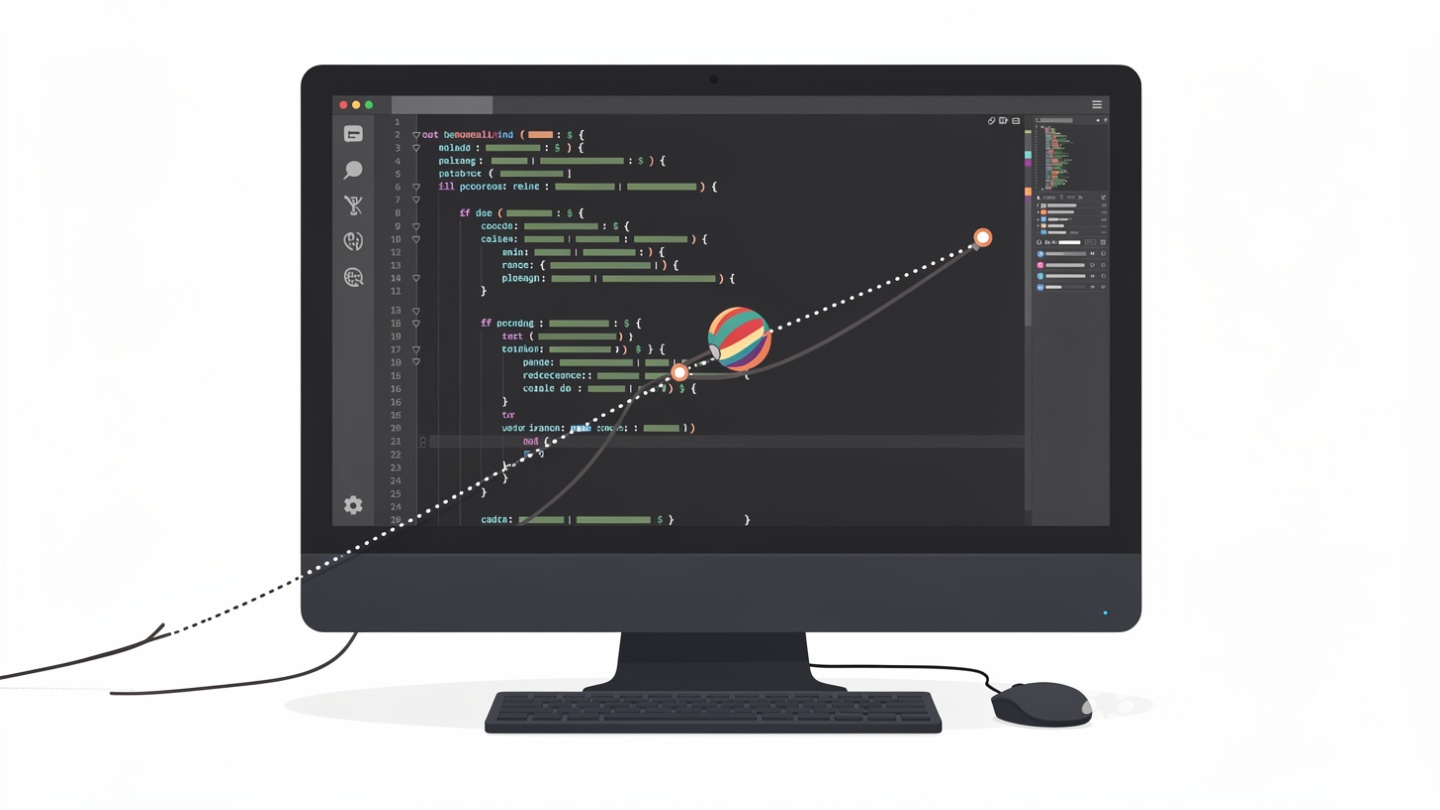

The CodeHS 9.7.4 Leash exercise focuses on understanding how movement, animation, and object interaction work in programming.
Students are typically asked to control a ball and a line (representing a leash) so that both move smoothly together on the screen.
This task is designed to strengthen core coding skills such as event handling, coordinate tracking, and real-time animation updates.
It also helps students learn how to debug logical errors when objects do not behave as expected.
In many cases, the challenge is not just writing code but fixing movement issues that cause the ball and leash to disconnect or behave incorrectly.
Understanding Line and Ball Movement Logic
In this exercise, the ball usually follows mouse movement or programmed coordinates.
The line acts as a leash, connecting a fixed point or another object to the ball.
For smooth animation, both objects must update their positions at the same time.
If one object updates faster or uses incorrect coordinates, the visual connection breaks.
This is why understanding coordinate systems (x and y values) is essential.
Even a small mistake in positioning logic can cause the animation to look broken or unrealistic.
Common Issues in the Leash Exercise
One of the most common problems students face is the ball moving correctly while the line stays fixed.
This usually happens when the line’s endpoint is not updated inside the animation loop.
Another frequent issue is the leash stretching incorrectly or pointing in the wrong direction.
This is often caused by incorrect use of angle calculations or missing coordinate updates.


Sometimes, the ball may lag behind the mouse or jump unexpectedly.
This usually indicates timing issues in the update function or missing real-time input handling.
How to Debug Movement Problems Step by Step
Debugging in CodeHS 9.7.4 Leash requires a structured approach.
The first step is to check whether both the ball and line are updating inside the same loop.
Next, verify that the correct variables are being used for x and y positions.
A mismatch between object coordinates is one of the most common coding mistakes.
It is also important to print or log values during execution.
This helps identify whether the program is receiving correct input data.
Finally, test small changes one at a time instead of rewriting the entire program.
This makes it easier to identify the exact source of the problem.
Improving Smooth Animation and Movement
Smooth movement depends on consistent updates and correct mathematical calculations.
Using proper interpolation between positions can help reduce sudden jumps or glitches.
Ensuring that the animation loop runs at a stable frame rate is also important.
If updates are inconsistent, the movement will appear jerky or delayed.
Another useful technique is separating logic for movement and drawing.
This makes the code cleaner and easier to debug when errors occur.
Understanding the Role of Coordinates in the Leash System
The leash system works based on coordinate relationships between two points.
One point represents the anchor, while the other represents the moving ball.
The line must always connect these two points accurately.
If either coordinate is incorrect, the leash will appear broken or misaligned.
Understanding how x and y values change over time is key to mastering this exercise.
This concept is also foundational for game development and animation programming.
Best Practices for CodeHS Debugging
A good debugging strategy starts with reading the instructions carefully.
Many errors occur because students misunderstand how the leash is supposed to behave.
Writing clean and organized code also makes debugging easier.
Clear variable names and structured functions help identify issues quickly.
Testing frequently during development is another important habit.
It prevents small mistakes from becoming larger problems later.
Lastly, students should learn to isolate problems instead of guessing.
Focused debugging saves time and improves coding accuracy.
Conclusion
The CodeHS 9.7.4 Leash exercise is an important lesson in animation, movement logic, and debugging techniques.
It teaches how objects interact in a coordinate system and how real-time updates affect visual output.
By understanding movement logic, identifying common errors, and applying structured debugging methods, students can successfully fix line and ball movement issues.
Mastering these skills also builds a strong foundation for more advanced programming concepts in the future.