
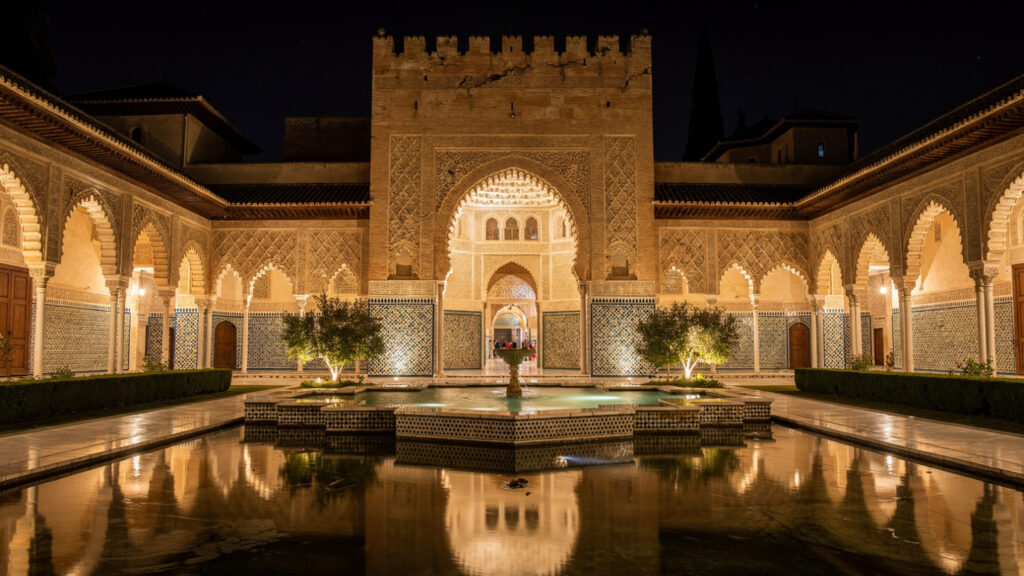
The Alhambra Night Tour at the iconic Alhambra represents one of the most carefully designed cultural tourism experiences in Europe.
It offers visitors a rare opportunity to explore the historic palace complex under atmospheric nighttime lighting, revealing a different emotional and visual dimension of the monument.
Beyond its aesthetic appeal, the night tour has become a significant contributor to tourism income while also supporting long-term heritage conservation efforts.
This balance between visitor experience and preservation strategy is what makes the Alhambra night program a global model for sustainable cultural tourism.
Understanding its success requires examining how attendance, exclusivity, pricing, and conservation policies work together to protect one of Spain’s most valuable historical landmarks.
The Cultural and Historical Value of the Alhambra
The Alhambra is a UNESCO World Heritage Site and one of the most visited monuments in Europe, known for its exceptional Islamic architecture and historical significance.
Originally developed during the Nasrid Dynasty, the complex reflects centuries of artistic, political, and cultural evolution in southern Spain.
Its intricate carvings, courtyards, and water features represent a high point of Moorish design and engineering.
Because of its historical importance, preserving the structure requires strict visitor management and continuous maintenance.
The night tour format was introduced partly to reduce daytime congestion while still allowing visitors to experience its cultural richness in a controlled environment.
How Night Tours Increase Tourism Revenue
The Alhambra Night Tour plays a key role in generating sustainable tourism income by offering a premium, limited-access experience.
Unlike daytime visits, night tours operate with reduced visitor numbers, which allows for higher ticket value and greater exclusivity.
This pricing strategy helps balance demand while ensuring that revenue supports ongoing preservation efforts.
Tourism income generated from these experiences is reinvested into conservation projects, staffing, and structural maintenance.
As a result, the night tour is not only a cultural attraction but also an essential financial mechanism for heritage sustainability.
The Role of Exclusivity in Visitor Demand
Exclusivity is one of the main factors driving the popularity of the Alhambra night experience.
Limited ticket availability creates a sense of rarity, encouraging visitors to book in advance and value the experience more highly.
This controlled access helps prevent overcrowding, which is a major challenge for historic sites worldwide.
By regulating visitor flow, the management ensures that the monument is not exposed to excessive wear and environmental stress.
The result is a carefully balanced system where exclusivity enhances both visitor satisfaction and heritage protection.
Preservation Strategy and Conservation Efforts
A core objective of the Alhambra Night Tour system is the long-term preservation of the monument’s fragile structures and artistic elements.
Reduced foot traffic during night visits minimizes physical stress on floors, walls, and decorative surfaces.
Controlled lighting systems are designed to highlight architectural features while preventing damage caused by excessive exposure.
Revenue generated from tourism is directly reinvested into restoration projects, including cleaning, structural reinforcement, and environmental monitoring.
This preservation strategy ensures that future generations can continue to experience the Alhambra in its authentic form.
Economic Impact on Local Tourism
The success of the Alhambra Night Tour has a significant ripple effect on the local economy of Granada.
Increased tourism demand supports hotels, restaurants, transportation services, and local businesses throughout the region.
Visitors who attend the night tour often extend their stay, contributing further to economic activity.
This extended tourism cycle strengthens Granada’s position as one of Spain’s most important cultural destinations.
The integration of heritage tourism and local economic growth demonstrates how cultural sites can support broader regional development.
Visitor Experience and Emotional Impac
The nighttime setting transforms the Alhambra into a more intimate and reflective experience for visitors.
Soft lighting highlights architectural details that may be less noticeable during daytime visits, creating a dramatic and atmospheric effect.
The quieter environment allows for deeper emotional engagement with the history and artistry of the site.
Many visitors describe the night tour as more immersive and spiritually moving compared to daytime exploration.
This emotional connection increases visitor satisfaction and strengthens the global reputation of the Alhambra experience.
Balancing Tourism Growth with Sustainability
One of the greatest challenges in managing the Alhambra is balancing high tourist demand with the need for preservation.
Overcrowding during peak seasons can threaten the structural integrity of historic sites if not properly managed.
The night tour system helps distribute visitor numbers more evenly across the day and evening hours.
This approach reduces pressure on the site while maintaining steady tourism revenue.
It represents a modern model of sustainable tourism that prioritizes both economic benefit and cultural responsibility.
Conclusion
The Alhambra Night Tour stands as a successful example of how cultural heritage sites can generate tourism income while ensuring long-term preservation.
Through controlled access, exclusive experiences, and carefully managed visitor flow, the system protects one of the world’s most important architectural treasures.
At the same time, it contributes significantly to the local economy and enhances global appreciation for Islamic art and history.
The balance achieved at the Alhambra demonstrates that tourism and conservation do not have to conflict—they can work together effectively when managed with care and strategy.
As a result, the Alhambra Night Tour continues to serve as a leading model for sustainable cultural tourism worldwide.