
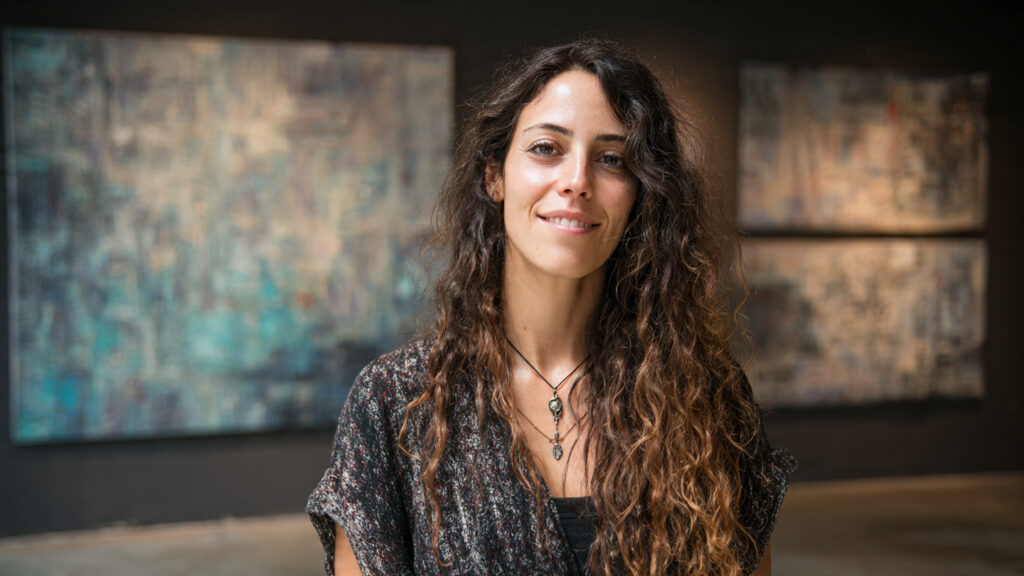
Shani Levni is a contemporary artist whose work has made a notable impact within today’s global art scene.
Known for her layered, symbolic, and emotionally rich visual language, Levni’s work engages deeply with themes of identity, memory, and cultural heritage.
Her artistic vision blends traditional symbolism with modern expressive techniques, creating works that invite reflection, exploration, and emotional engagement.
Through exhibitions, installations, and community engagement, Levni has developed a unique artistic voice that resonates with audiences around the world.
Early Life and Influences
Born in Tel Aviv, Israel, Levni grew up in a culturally diverse environment that encouraged curiosity and creative exploration.
Her upbringing, rich with Mediterranean and Jewish cultural influences, laid the foundation for her visual language—one rooted in visual storytelling and symbolic resonance.
This early exposure to multiple cultural currents shaped her interest in exploring identity, memory, and belonging through visual expression.
These themes would later become central to her work, forming the core of her artistic vision and purpose.
Education and Artistic Development
Levni pursued formal training in the arts, studying at prestigious institutions that strengthened both her technical skills and conceptual depth.
Her academic journey included studies in visual arts and art theory, allowing her to explore the philosophical dimensions of creativity and cultural memory.
During her education, she developed a distinctive approach to mixed media, combining paint, fabric, paper, and symbolic material to build layered surfaces rich with texture and meaning.
This tactile quality in her work reflects her belief that art should embody both emotion and history.
Artistic Style and Symbolism
At the heart of Shani Levni’s artistic vision is a layered, symbolic, and evocative style.
Her work frequently incorporates mixed media—blending color, texture, and symbolic forms such as olive branches, pomegranates, and scroll-like elements.
These motifs carry deep cultural connotations: olive branches suggesting resilience and peace, pomegranates implying fertility and heritage, and text fragments evoking memory and voice.
Her color palette often includes deep blues, earthy reds, and gold accents, reflecting both spiritual and natural landscapes.
Through these visual devices, Levni invites viewers to contemplate personal and collective histories, making each piece both visually striking and emotionally resonant.
Notable Works and Exhibitions
Levni has exhibited her work in important venues both in Israel and abroad, gaining recognition in contemporary art circles.
One of her celebrated pieces, “Whispers of the Olive Tree”, was featured at the Tel Aviv Museum of Art, melding intertwined olive branches and nuanced text to evoke ancestral presence and continuity.
She also presented “Letters Never Sent” at the Jerusalem Biennale, an immersive installation of hanging scrolls inscribed with fragmented narratives.
The installation invited viewers to walk among the scrolls—transforming the exhibition space into a shared emotional landscape.
Her solo exhibition “Between Earth and Sky” further showcased her ability to explore spiritual and emotional themes through textured surfaces and evocative tones.
These exhibitions highlight her evolving artistry and ability to communicate complex ideas through creative form.
Artistic Vision and Impact
Shani Levni’s artistic vision extends beyond aesthetics; it embraces cultural storytelling, emotional expression, and social connection.
Her works often address universal themes—identity, belonging, and memory—while remaining deeply personal and grounded in cultural heritage.
By inviting viewers to reflect on their own experiences and histories, Levni’s art becomes a dialogue rather than a static display.
Her style challenges observers to engage with emotional and philosophical layers embedded in each piece.
Community Engagement and Broader Influence
In addition to her gallery practice, Levni engages in community-based art initiatives that use creativity as a tool for expression and healing.
Her workshops and collaborative projects foster social connection and provide platforms for marginalized voices.
These efforts reflect her belief that art should bridge divides, empower individuals, and foster collective reflection—making her work relevant in both cultural and social contexts.
Conclusion
Shani Levni stands out as a contemporary artist whose work uniquely blends symbolism, cultural memory, and emotional resonance.
Her artistic vision—rooted in identity, memory, and layered expression—continues to captivate audiences and contribute to global art discourse.
Through exhibitions, installations, and community engagement, she invites us to see art not merely as visual experience, but as a space for reflection, connection, and shared humanity.